

Giving Insights
Making Every Dollar Count After the Aid Collapse
Nov 2, 2026 · By: Michou Tchana-Hyman
A time of reckoning
In 2025, official development assistance fell 23.1 percent, the largest annual drop ever recorded. The United States alone cut its aid by more than half, and the OECD expects a further decline in 2026. Behind those numbers are programs that stopped overnight and local organizations that closed their doors within weeks.
The field has settled on a consensus: philanthropy cannot fill the gap. Bill Gates has said so plainly, and he is right. Private giving does not operate at the scale of government aid. Nor should it.
But accepting that raises a more useful question. If we cannot fill the gap, how do we make sure every dollar we do give goes as far as it possibly can?
Thinking beyond large institutions
The field is already reorganizing. In October, at its first Philanthropy Forum here in Bangkok, the World Bank Group launched a Philanthropy Hub: a single entry point for foundations and family offices to contribute capital, expertise and knowledge to its initiatives, and to take proven solutions to scale.
But there is a limit to how far large systems reach. Communities on the margins, whether rural, remote, led by women, or simply too small to register in a global portfolio, are routinely passed over.
Pooling money into one large, centralized vehicle is not the only option, and for many philanthropists it may not be the best one. Funders can give directly to local organizations, back regional funds led by people from the communities they serve, or work with partners who already hold those relationships. The question worth asking is not where money can be gathered most easily, but where it will do the most once it arrives.
Getting the most out of each dollar
Efficiency has become a charged word over the past two years. It is worth reclaiming, because the facts are clear about where the waste sits.
Money that flows through large systems pays for those systems first. International salaries, headquarters overhead, layers of intermediaries and compliance built for billion-dollar portfolios all take their share before anything reaches a community. Money given directly to local organizations skips most of those layers, so more of each dollar becomes the work itself.
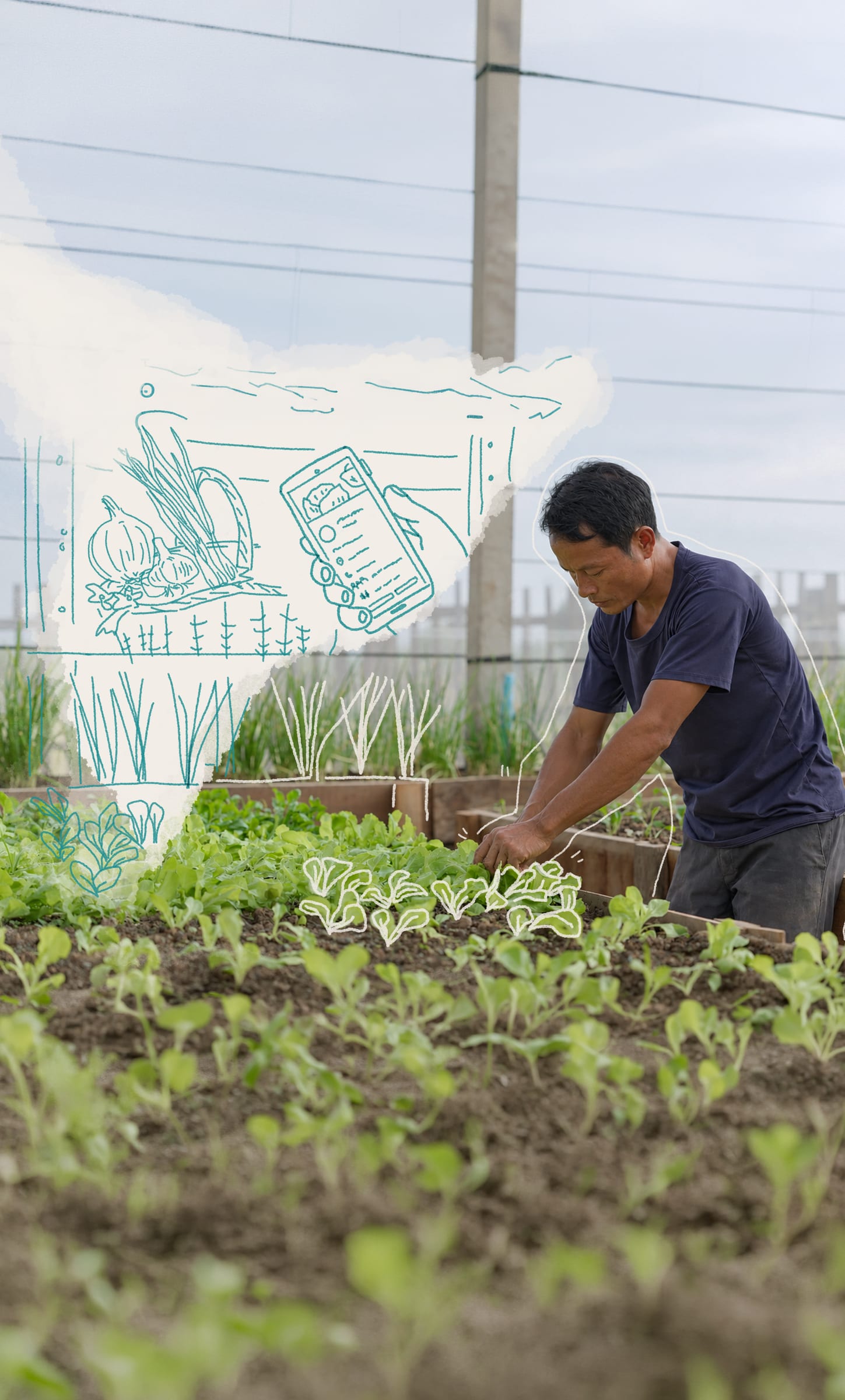
In Laos, one of our partners used a $10,000 grant to build an app that connects farmers directly to consumers. Half of the grant paid a developer. The other half paid for visits to farming collectives in the Laos Farmers Association, training members to use it. Years earlier, a large, well-funded initiative had spent more than $1 million trying to build something similar. It never got off the ground. The difference was not the size of the budget. It was who held it, and how close they were to the problem.
Learn more about this story in our podcast.
The research backs this up. Studies by The Share Trust found that programs led by local partners were 14 to 19 percent more cost-efficient than those led by international partners, mostly because of salary and overhead differences. In one project, an international NGO charged overhead on its full budget share even though 81 percent of that money passed through to local partners, who received no overhead at all.
Yet when the cuts came, local organizations were hit hardest. Funding to local and national humanitarian actors fell 27 percent in 2025, faster than overall cuts, and only 4.3 percent of humanitarian funding reached them directly.
Efficiency is also about time. Large funding systems tend to come with large reporting requirements: lengthy proposals, custom indicators, frequent reports, and a different format for every funder. For a small team, meeting those demands can consume the same people who deliver the work.
Restrictions carry a cost too. When large funders set the parameters for how money can be used, local organizations are pushed to deliver what the funder has defined rather than what the community needs. Those needs shift over time and differ from one local context to the next, and a fixed budget line cannot follow them. Funders who simplify reporting and give flexible money are not lowering their standards. They are removing friction from the organizations that already do the most with every dollar: the local ones.
What USAID taught us about concentration
The second lesson of the past two years is about risk. When USAID was dismantled, organizations that depended on it lost most of their funding at once. In Somalia, more than 60 percent of NGOs counted USAID as their leading donor. Worldwide, nearly half of LGBTQIA+ rights groups surveyed have lost more than half their budgets since January 2025, with US government funding the most-cited source.
The dependency ran deeper than budgets. One study found that USAID had become embedded in its partners' monitoring practices, their skill sets, even how they thought about their work. When a single funder shapes how an organization defines success, losing that funder means losing more than money.
That lesson applies to every funder, large or small. Any system that concentrates resources and decisions in one place carries this risk. And the people who design these systems are rarely the ones who bear that risk. When a system collapses or is dismantled, as USAID was, the cost falls on local organizations and the communities they serve, who had little or no say in how it was built.
Spreading money across many trusted, locally rooted organizations is not only more equitable. It is more resilient.

Scale the practice
So what should scale? The practice of giving directly, flexibly and on trust. It works, and it deserves to spread across the field. That means multiyear, unrestricted funding, light and proportionate reporting, and letting communities set the priorities.
It also means being honest about where our own practice is still unresolved. This year, Move92 has faced a question we have not fully answered: what do we do when one of our donors wants to fund an organization that has no other major funders? Becoming someone's only significant source of support risks recreating the very dependency described above. We are still working out how to handle it, and we do not have a settled answer yet.
We would welcome hearing how peers navigate that question. But the larger invitation is to every funder: look at your own giving with the same honesty. How much of it reaches local organizations directly? How much comes with restrictions that decide, from a distance, what communities need? How much of your partners' time goes to reporting back to you?
The aid collapse is a reckoning for all of us. It is also a chance to build a system where more of every dollar, and more of the decisions, sit with the people closest to the work.